













Testosterone-fueled, Soviet-style building
In the center of Warsaw, on Parade Square, stands a 231-meter-high colossus in a dated architectural style: the Palace of Culture.
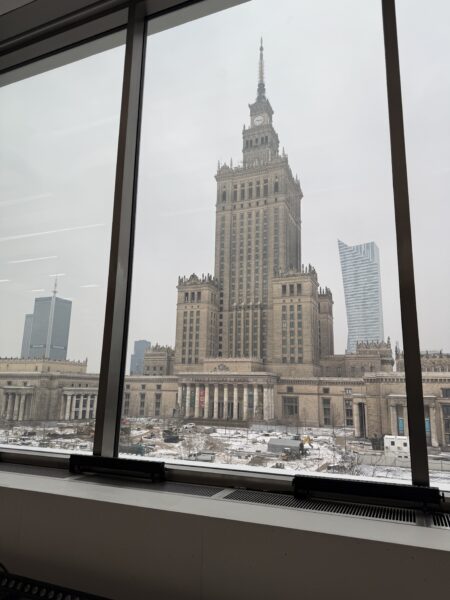
A gift from Stalin, built according to his wishes—though he died before its completion—it was erected in 1955 as a kind of testosterone-fueled, Soviet-style Empire State Building. At one point, there were discussions about demolishing this 3,288-room behemoth, a large blight recalling the city’s painful past.
MSN
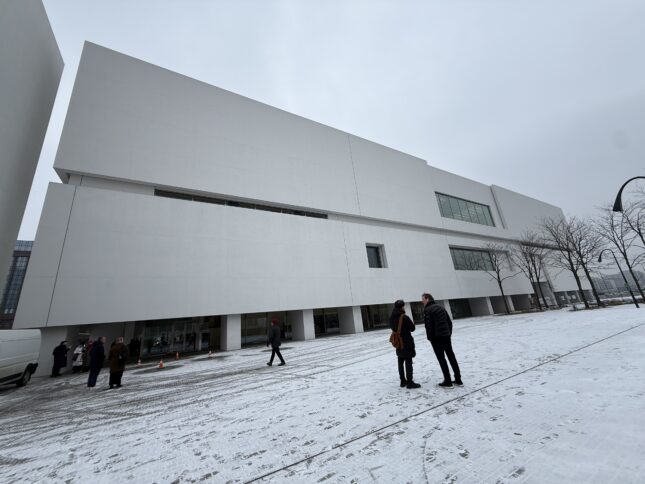
Instead, the Polish people decided to create a counterpoint directly across from it: a contemporary art museum. The process, however, would prove particularly arduous.
The institution known as MSN (Museum of Modern Art in Warsaw) was established in 2005. The collection of modern and contemporary art came into being in 2011, and the final architectural design of the building that would house it was selected in 2013.
Numerous controversies
In the meantime, there were numerous controversies, conflicts, political shifts and extensive discussions between municipal and national authorities. Finally, on February 20, 2025, the MSN was inaugurated.
And it must be said: It’s an impressive institution. On the evening of the opening, some visitors were brought to tears. Both the building and its collection represent achievements of an international caliber for Poland.
Miroslaw Balka
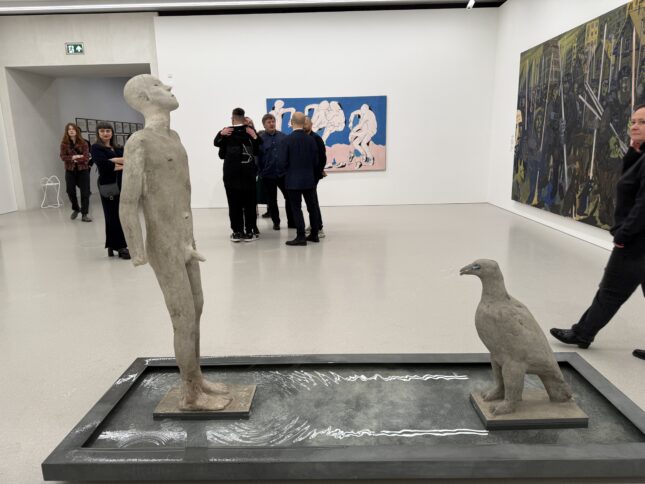
Mirosław Bałka (born in 1958), one of Poland’s best known contemporary artists, was present at the opening and represented by two works in the exhibition. “At first, I thought this kind of white box would appear too imposing. But in fact, no. It’s what allows us to withstand the unexpected winds of history, the ones that make the world more fragile.”
Miroslaw Balka
Warsaw’s residents quickly gave the relatively austere white cube a nickname: “the shoebox.”
Thomas Phifer
Master of white concrete and American architect of the building, Thomas Phifer, is known for designing the celebrated Glenstone Museum near Washington, D.C (Read here the report about Glenstone with an other interview of Thomas Phifer). He explains: “We dedicated a great deal of time to studying the site. We knew we had to create a powerful architectural object, with a strong presence in the city.”
Temple of natural light
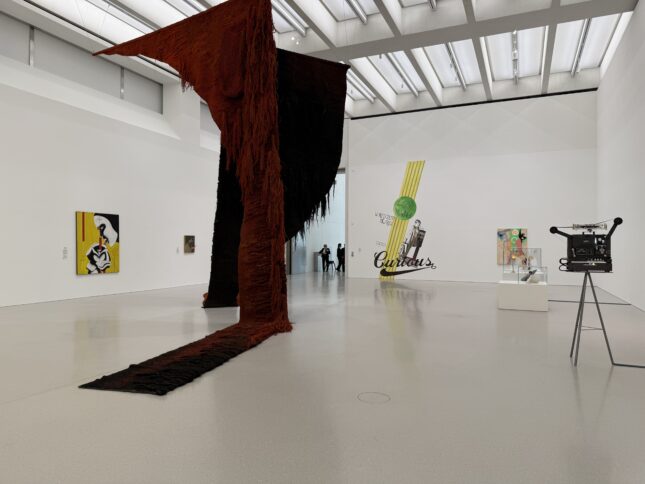
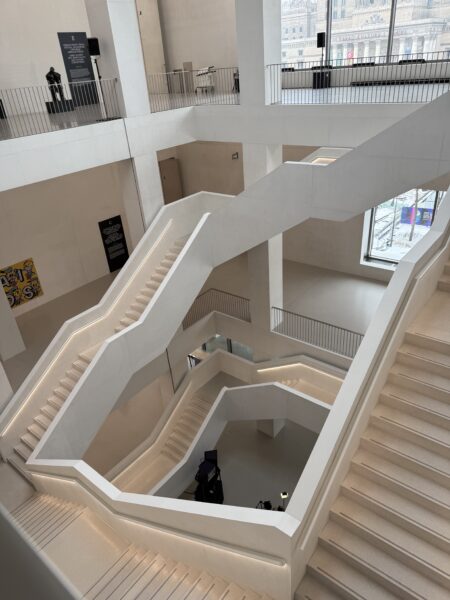
But the true success of the project lies inside. Phifer has created a temple of natural light streaming in from above, with a central staircase in a sophisticated design that connects the galleries. “Light is what connects us to nature,” explains the architect, a dedicated practitioner of meditation.
Joanna Mytkowska
The museum’s surface area—4,543 square meters—is currently dedicated to the permanent collection. It was assembled with a focus on Polish art from the late 1950s onward, punctuated by carefully selected complements from the international scene. “Acquisition decisions pass through multiple stages—first internally, then we must also convince a committee within the Ministry of Culture,” notes Joanna Mytkowska, MSN’s tenacious director since 2007.
Eating a banana
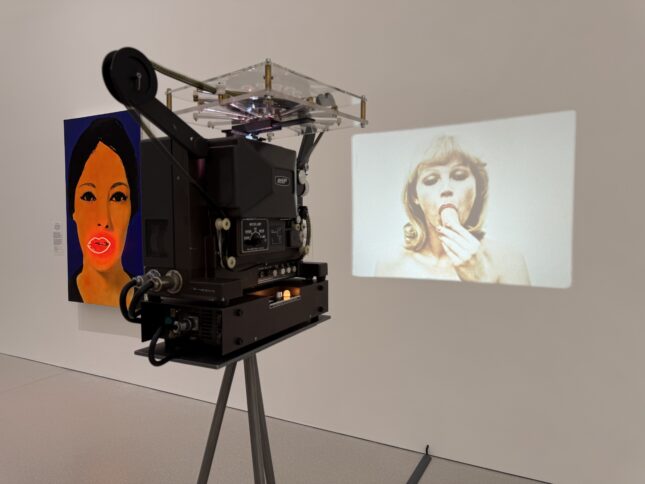
Natalia LL
Among the acquisitions that sparked controversy at the time is an installation by renowned German artist Isa Genzken (born in 1948), featuring her characteristic assemblage of discarded objects. It was purchased in 2015 for half a million złotys (around €120,000 today). Another source of controversy were the video and photographs by Polish artist Natalia LL (1937-2022), titled “Consumer Art,” in which she suggestively eats a banana.
Alina Szapocznikow
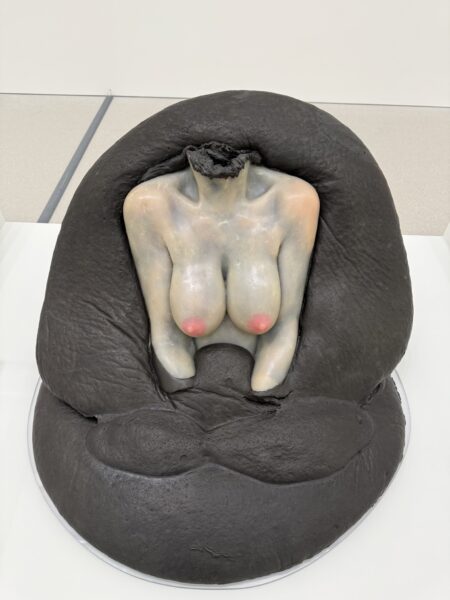
Alina Szapocznikow
Overall, the arrangement of the 150 exhibited works is harmonious and elegant, with a significant representation of female artists. One of MSN’s highlights is a group of translucent, colorful polyester sculptures in organic forms by Alina Szapocznikow (1926-1973), the Polish artist who lived in Paris.
MSN Museum. Warsaw. https://artmuseum.pl/
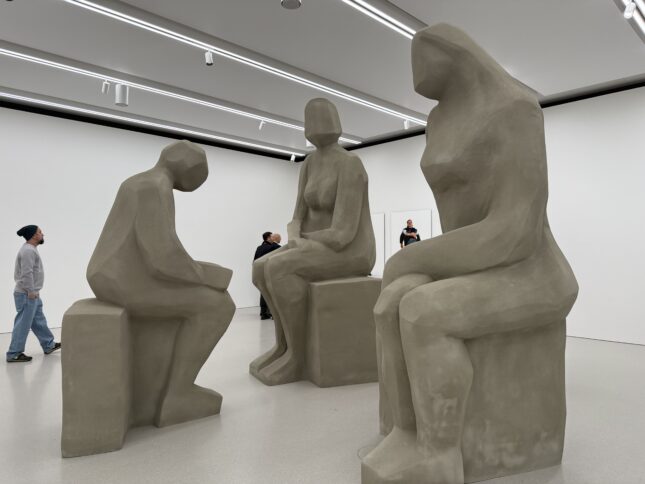
Goshka Macuga
Support independent art journalist
If you value Judith Benhamou Reports, consider supporting our work. Your contribution keeps JB Reports independent and ad-free.
Choose a monthly or one-time donation — even a small amount makes a difference.
You can cancel a recurring donation at any time.