












Paris: creative effervescence
A nest teeming with artists: Paris was, for nearly a century up until the Second World War, the global epicenter of an unusually creative effervescence. From Camille Corot, who paved the way for the Impressionists, to Marcel Duchamp, a pivotal figure in conceptual art, passing through the likes of Modigliani and Giacometti, the city vibrated with an artistic freedom that had ambitious spirits the world over flocking to Montmartre and Montparnasse.
Guggenheim New York
Guggenheim New York
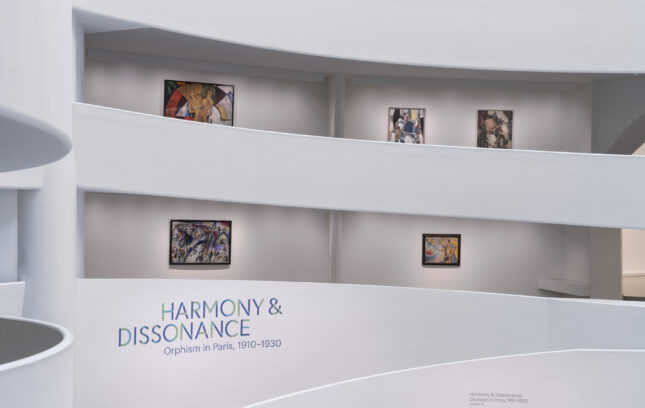
Naturally, French institutions frequently celebrate this phenomenal period. But this time, it is across the Atlantic that the Guggenheim Museum in New York gives its own resounding tribute, spread over five floors, in its exhibition “Harmony and Dissonance: Orphism in Paris, 1910-1930,” open through March 9.
Vivien Greene
According to co-curator Vivien Greene, the exhibition offers “the first exploration of a movement that sought to break away from Cubism under the aegis of poet Guillaume Apollinaire (1880-1918).” It was, in fact, Apollinaire who coined the term in 1913.
The matter is color
Frantisek Kupka
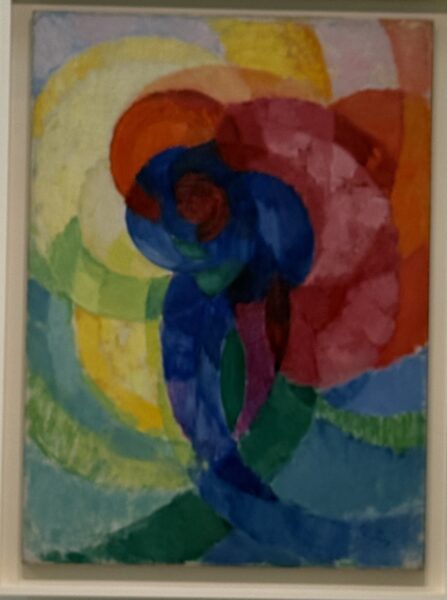
First and foremost, it is worth noting that the assembly of 82 paintings within the museum’s spiraling galleries offers a visual feast, akin to a fireworks display, since the heart of the matter is color. Or, rather: how paintings exploring the decomposition of light through kaleidoscopic effects gradually evolved toward abstraction.
Orpheus and his lyre
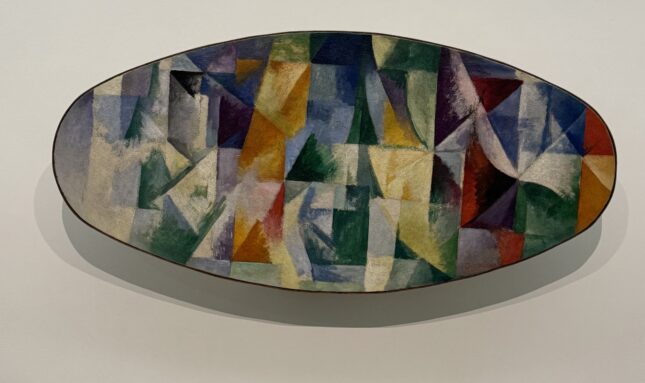
Robert Delaunay
But by focusing too much on the definition of artistic movements, both critic and visitor risk losing their way. Which is how Apollinaire, in spite of his clairvoyant eye, grouped under the Orphist banner—referencing the Greek myth of Orpheus, whose ultimate weapon was his lyre—artists who soon diverged significantly in their artistic pursuits.
Robert Delaunay
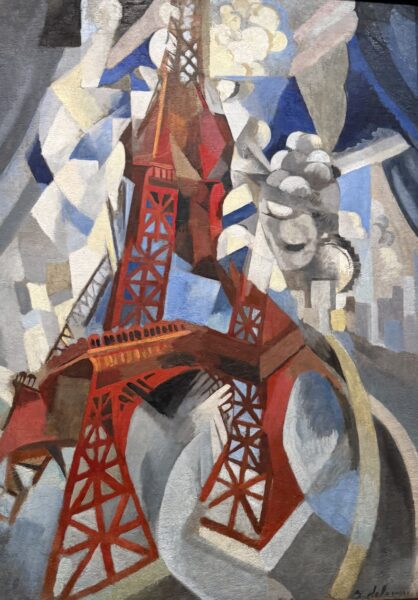
Robert Delaunay
The star of the exhibition is Robert Delaunay (1885-1941), to whom a heartbroken Apollinaire ran for solace in 1912, as the story goes. He then commented on his friend’s work by saying “Delaunay was in the process of inventing an art of pure color.”
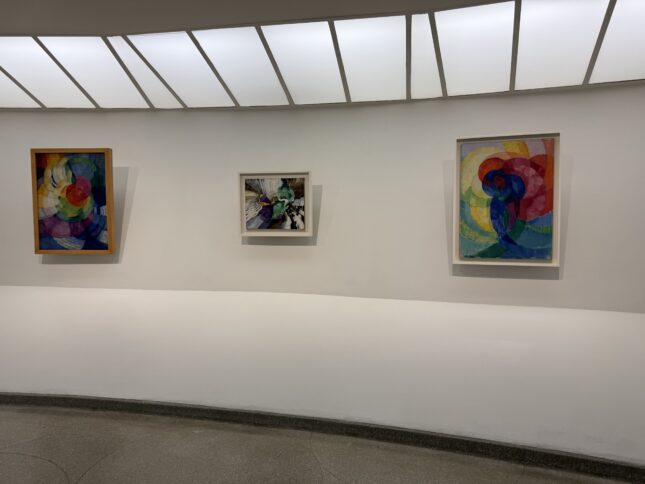
Frantisek Kupka
Goethe and Seurat
Before him, Seurat, the Neo-Impressionists and even the German writer Johan Wolfgang von Goethe, had already engaged the question of light decomposition. A crooked Eiffel Tower, symbol of modernity, became the emblem of Delaunay’s polychromatic explorations, rendered at increasingly grand scales.
Jasper Johns
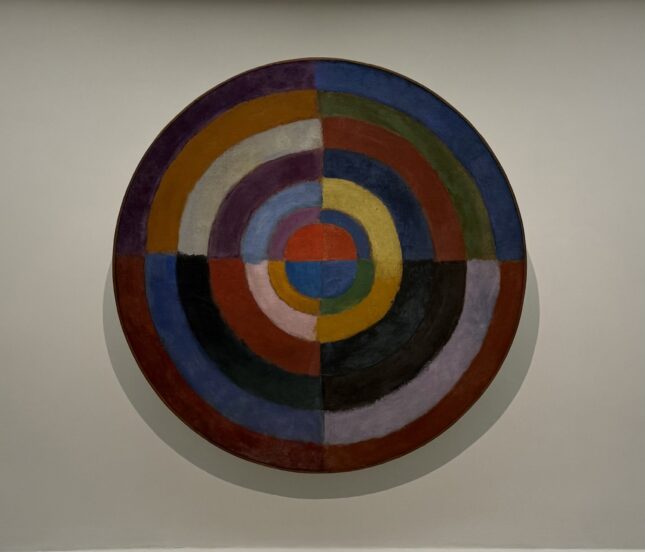
Robert Delaunay
In parallel, as early as 1913, he created an abstract masterpiece, a fiery-toned, round composition entitled “Premier disque” (“First Disc”), the most visually striking piece at the Guggenheim. This painting, which is still held by a private collection, is composed of concentric circles whose hues shift at each quarter-turn. Here we see Delaunay animated by a kind of mystical illumination. It inevitably brings to mind Jasper Johns’ targets created in the 1950s.
Guillaume Apollinaire
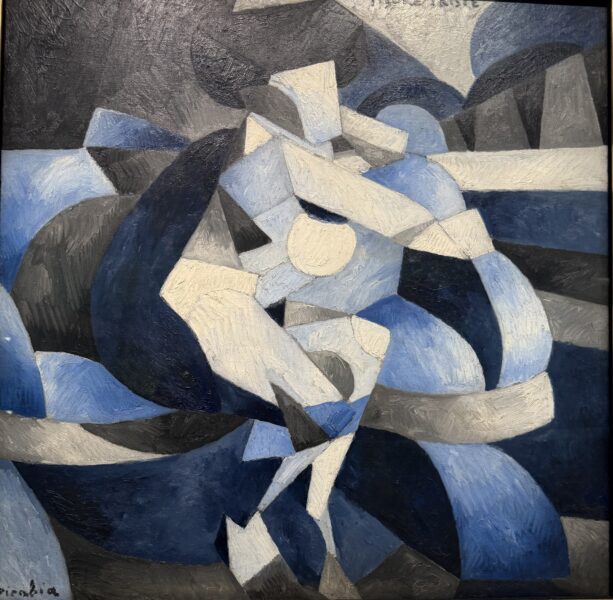
Francis Picabia
Apollinaire had highlighted another of his new heroes, František Kupka (1871-1957), a pioneer of abstraction, whose swirling compositions were inspired by music. The exhibition also features paintings from the 1910s by future pranksters Duchamp and Picabia, then obsessed with depicting motion on canvas, as well as a remarkable and atypical tribute by Chagall to Apollinaire in 1913, also disc-shaped.
“Ist” means nothing
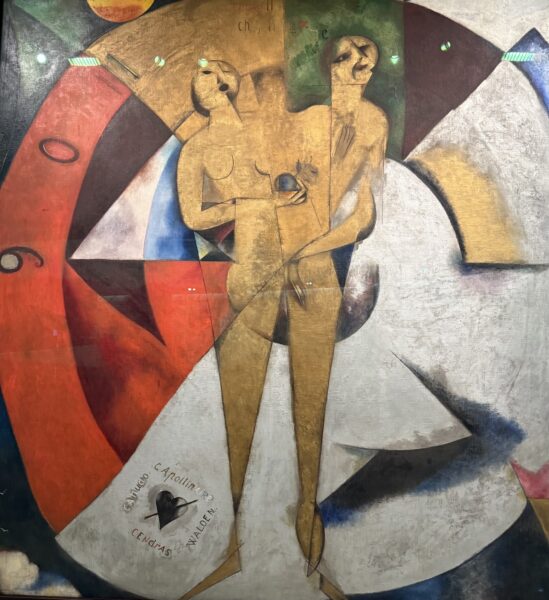
Marc Chagall
However, by June 1914, the poet himself no longer believed in his own theory: “We mustn’t take the terms Cubist, Orphist, or Futurist literally anymore. It has been a long time since they’ve meant anything.” Changing one’s mind, as they say, is a sign of intelligence. Meanwhile, the paintings displayed at the Guggenheim, no matter how they are classified, remain as stunning as ever.
Through March 9. www.guggenheim.org
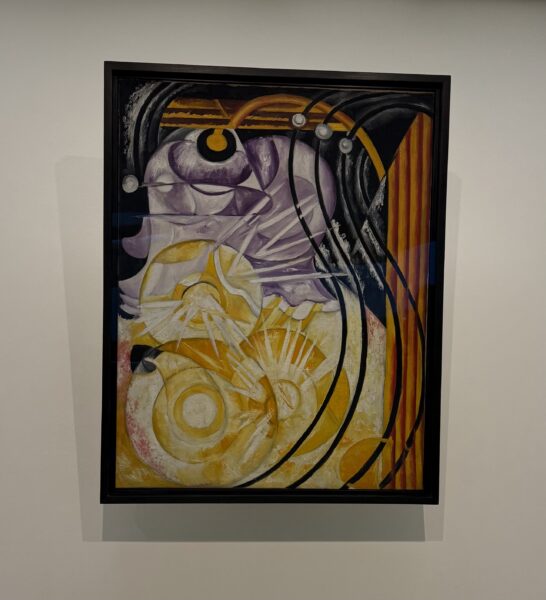
Natalia Goncharova
Support independent art journalist
If you value Judith Benhamou Reports, consider supporting our work. Your contribution keeps JB Reports independent and ad-free.
Choose a monthly or one-time donation — even a small amount makes a difference.
You can cancel a recurring donation at any time.