Marcel Duchamp
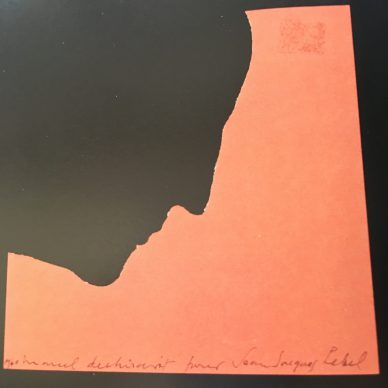
Marcel Duchamp
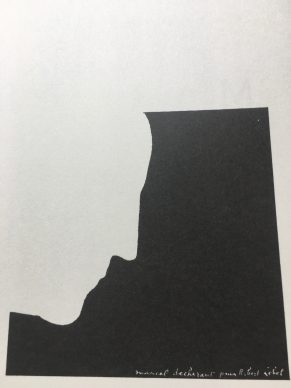
Marcel Duchamp
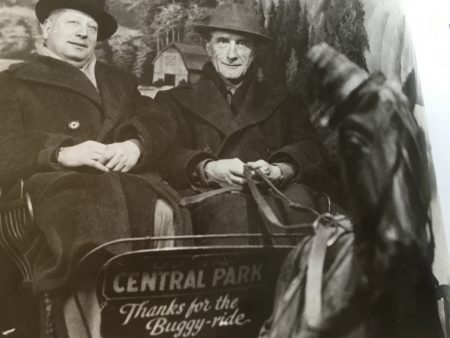
Robert Lebel &Marcel Duchamp
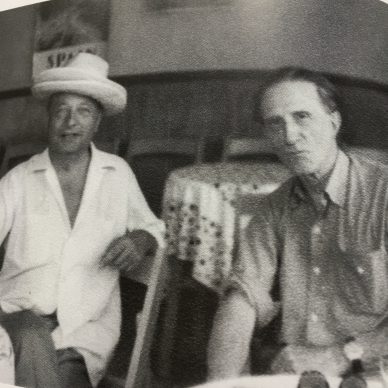
Robert Lebel and Marcel Duchamp
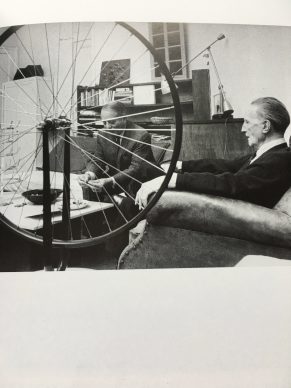
Robert Lebel and Marcel Duchamp
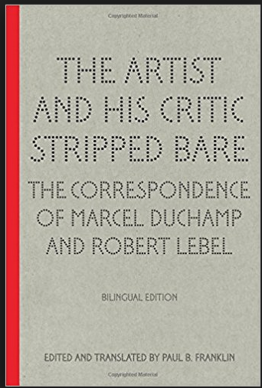
The artist and his critic
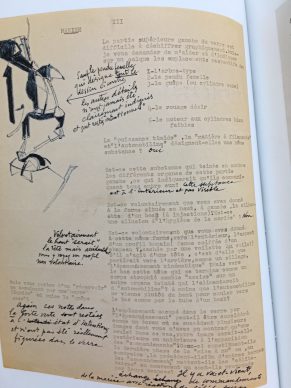
Marcel Duchamp
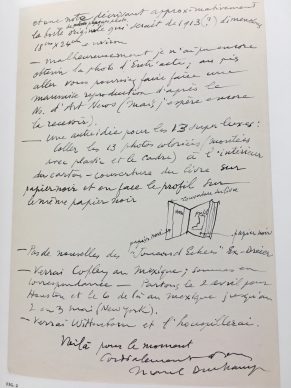
Marcel Duchamp
Because in this early part of the 21st century, Marcel Duchamp (born in 1887) is the patron saint of contemporary art.
All artistic practices poking fun at the world take the works of this facetious artist as a springboard (and Picabia‘s too).
Every artist who employs the concept of the readymade – and there are no shortage of them – is also a child of Marcel Duchamp. So it’s imperative to know all about him and understand him better…
But it’s not every day that you have the chance to meet someone who actually knew this critical figure in the history of art.
Introducing Jean-Jacques Lebel, an artist, exhibition curator (his credits include Beat Generation formerly at the Centre Pompidou ) and son of Robert Lebel (1901-1986), an expert in the old masters and sparring partner of Marcel Duchamp.
Jean-Jacques Lebel recalls how he first got to know Marcel when he was seven years old, living in exile in New York with his parents and the gang of surrealists.
Jean-Jacques Lebel remembers above all Duchamp’s love of language and word games, something he shared with Lebel’s father and the psychiatrist Jacques Lacan.
He also recalls how Duchamp thought of himself an outsider and how he was completely destitute. Take a look at this very revealing six-minute sequence.
This same Jean-Jacques Lebel is currently attempting to rehabilitate his father’s work. Among other things, he’s published a bilingual edition of Robert Lebel and Marcel Duchamp’s correspondence through Getty, which formed the basis for Robert Lebel’s ‘On Marcel Duchamp’, the first ever biography of the artist, published in 1959. It does not read like a novel. You have to root around in the pages to tease out the intellectual intimacy of the inventor of the readymade.
The Getty Research Institute acquired the Duchamp-Lebel correspondence from Jean-JacquesLebel in 2007. It comprises 60 letters, 3 telegrams, 3 postcards(…) and one typed questionnaire, all from Duchamp to Lebel, and 18 letters from Lebel to Duchamp.
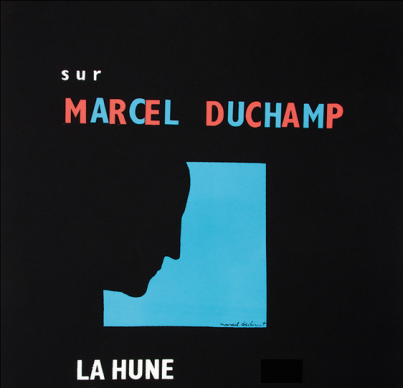
When ‘On Marcel Duchamp‘ was published in 1959, Robert Lebel tried to persuade a Parisian gallery or museum to organise an exhibition of Duchamp’s work. He was forced to stage it in the bookstore gallery La Hune.
Jean Jacques Lebel adds by way of conclusion, ‘Let’s remember that Bill Copley’s Cassandra Foundation had to pay so that ‘Etantdonnés‘, undoubtedly one of the great artistic statements of our time, could be accepted as a gift and installed at the Philadelphia Museum of Art, home of the exceptional Arensberg Collection.‘
The Artist and His Critic Stripped Bare. The Correspondence of Marcel Duchamp and RobertLebel. Getty Publications. 2016
Please note also about Marcel Duchamp:
A beautiful utopian initiative from Thomas Girst author of The Duchamp Dictionary (Thames &Hudson):
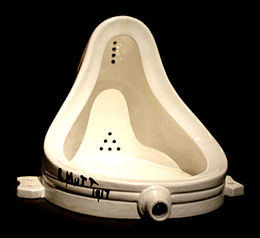
‘On Sunday, April 9, to commemorate the birthday of “the most influential artwork of all time(1),” museums worldwide will allow access at no cost to anyone mentioning the password “Richard Mutt” to members of the entrance staff – for the duration of one hour, between 3 PM and 4 PM in the afternoon.
During that time, a dedicated men’s room with urinals installed will turn into a unisex restroom to provide space for everyone wanting to honor the centenary of Fountain, the most infamous of ready-mades by Marcel Duchamp, with impromptu readings, homages, proclamations, and performances. All participants are welcome to organize via social media and post their results online via #Fountain100′.
Tate Modern is supposed to send out an Instagram message to their 1.4 million viewers.
And New York’s Museum of Modern Art, Berlin’s Hamburger Bahnhof, Paris’s Pompidou Center ( if the strike ends on time), Städel Museum in Frankfurt, Kunsthalle in Basel, and the Israel Museum, in Jerusalem are supposed to be part of the project.
I have not received yet any confirmation from the museums.
(1)declared by the BBC as the most influential artwork of the 20th Century according to a 2004 survey of 500 art experts.
Support independent art journalist
If you value Judith Benhamou Reports, consider supporting our work. Your contribution keeps JB Reports independent and ad-free.
Choose a monthly or one-time donation — even a small amount makes a difference.
You can cancel a recurring donation at any time.
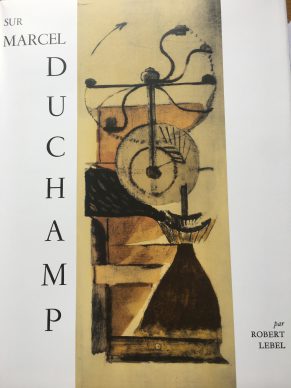
Sur Marcel Duchamp
Marcel Duchamp

R. Mutt. 1917
Marcel Duchamp
Marcel Duchamp
Marcel Duchamp
Robert Lebel &Marcel Duchamp
Robert Lebel and Marcel Duchamp
Robert Lebel and Marcel Duchamp
The artist and his critic
Marcel Duchamp
Marcel Duchamp
Sur Marcel Duchamp
Marcel Duchamp